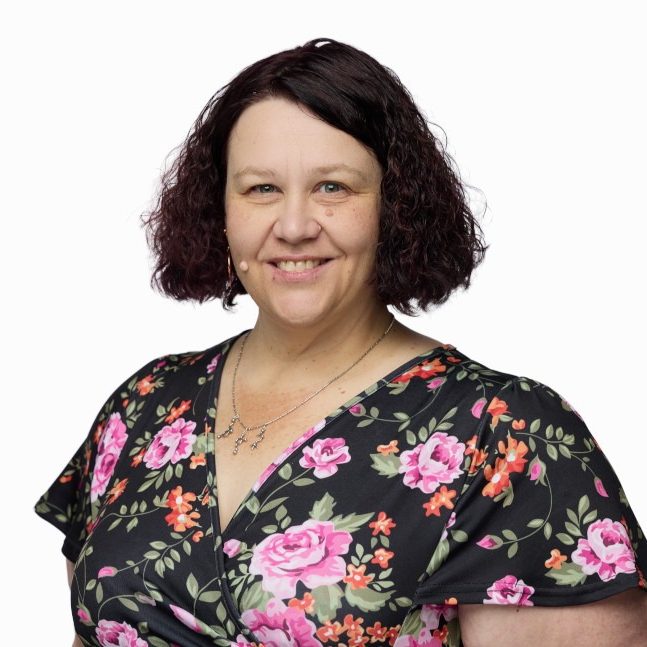
Dr Rachelle Bonner is a proud Wiradjuri woman, and brings more than two decades of executive leadership across government, academia and the not-for-profit sector in roles spanning health, disability, aged care, bioethics, and human rights. She is AuDHD and profoundly deaf, and brings lived experience of trying to navigate systems not built for people living at the margins of visibility. Fuelled mostly by caffeine and dogs, she is also raising a gloriously sassy daughter, who sharpens her feminism daily and reminds her that the future is watching.
Tell us about your professional experience and what your role on WWDA’s Management Committee entails.
I have more than 20 years’ experience across government, human rights, health, regulatory practice, research, and policy. Throughout my career, I’ve worked at the intersection of systems, evidence, and reform, with a strong commitment to human rights, accountability, and improving outcomes for people whose voices have historically been overlooked.
I’m currently Chief of Staff to the ACT Greens, where I work at the intersection of political decision-making, policy development and advocacy, helping translate values and commitments into meaningful action. Previously, I held senior executive roles across the Australian Public Service, including leading Australia’s National Preventive Mechanism under the Optional Protocol to the Convention Against Torture and providing national oversight of places of detention. I also led work to embed rights-based regulation, cultural safety and self-determination into aged care systems, particularly for older Aboriginal and Torres Strait Islander people.
I’m also a researcher and published author with a PhD in Medicine. My research explores intersectionality, reproductive medicine, trauma-informed practice, and human rights, particularly how institutional structures and policies shape people’s experiences and outcomes. I’m passionate about bridging research, lived experience, and practical reform so that evidence translates into real improvements in people’s lives.
As a member of WWDA’s Management Committee, I bring this combination of lived experience perspectives, executive leadership, policy experience, research and systems-level accountability. I see the role as an opportunity to contribute to a disability rights movement that recognises the diversity of women, girls, and gender-diverse people with disabilities, and understands that meaningful inclusion requires us to address the intersecting impacts of ableism, racism, sexism and other forms of discrimination.
For me, this work is about more than representation. It is about challenging the structures that perpetuate inequity, ensuring people with disability have genuine influence over decisions that affect them, and supporting reforms that are culturally safe, accessible, and grounded in human rights. I want to contribute to a WWDA that not only advocates for change but helps make systemic change happen.
How do you bridge academic research, lived experience and practical reform in your work?
For me, bridging research, lived experience, and practical reform means recognising that each brings something essential to the table. Research can help us understand patterns, identify gaps, and build an evidence base for change. Lived experience tells us what those patterns mean in people’s everyday lives and whether existing approaches are actually working. The important part is ensuring these forms of knowledge are not treated as separate or unequal. People with disability, and especially those with intersecting identities, hold valuable expertise that must be respected alongside academic and professional knowledge.
In my work, I see the importance of bringing these perspectives together to identify systemic barriers, inform advocacy, and develop recommendations that can translate into real improvements in policy, practice, and service delivery. Ultimately, research should not sit on a shelf, and consultation should not be a tick-box exercise. The measure of success is whether the knowledge we gather leads to practical change, strengthens accountability, and improves the lives of the people whose experiences have informed that work.
“Intersectional disability justice means recognising the whole person and understanding that there is no one-size-fits-all approach to inclusion. It means centring lived experience, respecting cultural identity, recognising the strengths within our communities, and addressing the systemic barriers that prevent people from exercising their rights. Ultimately, it means moving beyond just being included in existing systems to transforming those systems so that they are culturally safe, accessible, equitable, and accountable to the people they serve.”
How have your experiences as a First Nations woman with disability shaped your understanding of systems and advocacy?
My experiences as a First Nations woman with disability have shaped my understanding of how systems operate, who they are designed for, and who can be left out. They have shown me that people don’t experience identity, discrimination, or disadvantage in isolation. Culture, gender, disability, history, and the ongoing impacts of colonisation all intersect and influence how people experience services, institutions, and decision-making.
For me, advocacy is about more than asking systems to improve. It is about challenging the structures, attitudes, and power imbalances that create barriers in the first place. It is about ensuring women with disability are not simply spoken about, but are listened to, respected, and supported to lead decisions that affect our lives.
What does trauma-informed practice look like when working with communities that have experienced systemic harm?
Trauma-informed practice starts with understanding the context in which people have experienced harm. We cannot separate individual experiences from the broader impacts of colonisation, racism, ableism, fat phobia, LGBTQIA+ phobia, gender-based violence, and institutional discrimination. It means creating environments where people feel safe, respected, and heard, without requiring them to repeatedly share painful experiences to be believed or receive support. It means offering choice, being transparent, respecting boundaries, listening without judgement and recognising that trust must be earned. For First Nations communities, it also means understanding the importance of cultural safety, connection to Country, family, community, and self-determination, while recognising that every person’s experience and relationship to culture is different.
Importantly, trauma-informed practice is not just about how we interact with individuals. It must shape how organisations operate, how decisions are made, how complaints are handled, and how power is shared. We need to ask not only whether our services are intended to help, but whether people experience them as safe, respectful and empowering.
“Meaningful inclusion looks like being welcomed, respected, heard, and valued for who you are. It means having a genuine voice in decisions, having the support and access needed to participate, and knowing that your contribution can influence outcomes. It is not simply being invited into a room; it is having the opportunity to shape what happens in that room.
“Accessibility is not a favour or an afterthought; it is a right and a shared responsibility.”
What is one issue affecting people with disability that deserves greater attention?
I believe greater attention needs to be given to the voices, rights and safety of people with disability who experience multiple forms of discrimination. Too often, people are required to navigate fragmented systems that do not understand the complexity of their lives. When disability services, health services, housing, justice, and community supports operate in isolation, people can fall through the gaps. These barriers can be even greater when services are inaccessible, culturally unsafe, or difficult to navigate. We need stronger accountability, better coordination across systems, and meaningful investment in community-led support. Most importantly, people with disability must be involved in designing, delivering, and evaluating the services intended to support them.
We should not have to keep telling our stories to prove that barriers exist. The responsibility must shift towards systems demonstrating that they are listening, responding, and making meaningful change.
“I want the WWDA community to know that meaningful change happens when we move beyond consultation to genuine power-sharing, accountability, and action. We all have a role to play in creating a disability rights movement where nobody is left behind and where every person has the opportunity to live with dignity, safety, choice and self-determination. I want us to continue building a community where we listen to one another, respect our differences, challenge ableism and racism, and create space for leadership that reflects the diversity of our experiences.”